Construction contingency: how to manage it in a job budget
By Smart Way Builds · Updated
Construction contingency is an allowance for uncertainty within a defined budget. It is not guaranteed profit, a substitute for pricing known work or automatic permission to recover extra money from a customer.
The useful question is not simply "what percentage should I add?" It is "which risks remain in this job, what might they cost, and who controls the allowance?" There is no universal percentage suitable for every building project.
Separate known scope, uncertainty and profit
Price known work in the relevant trade categories. Document assumptions for work that is not fully defined. Identify contingency separately so it is not confused with your intended margin or with a contract allowance that has its own rules.
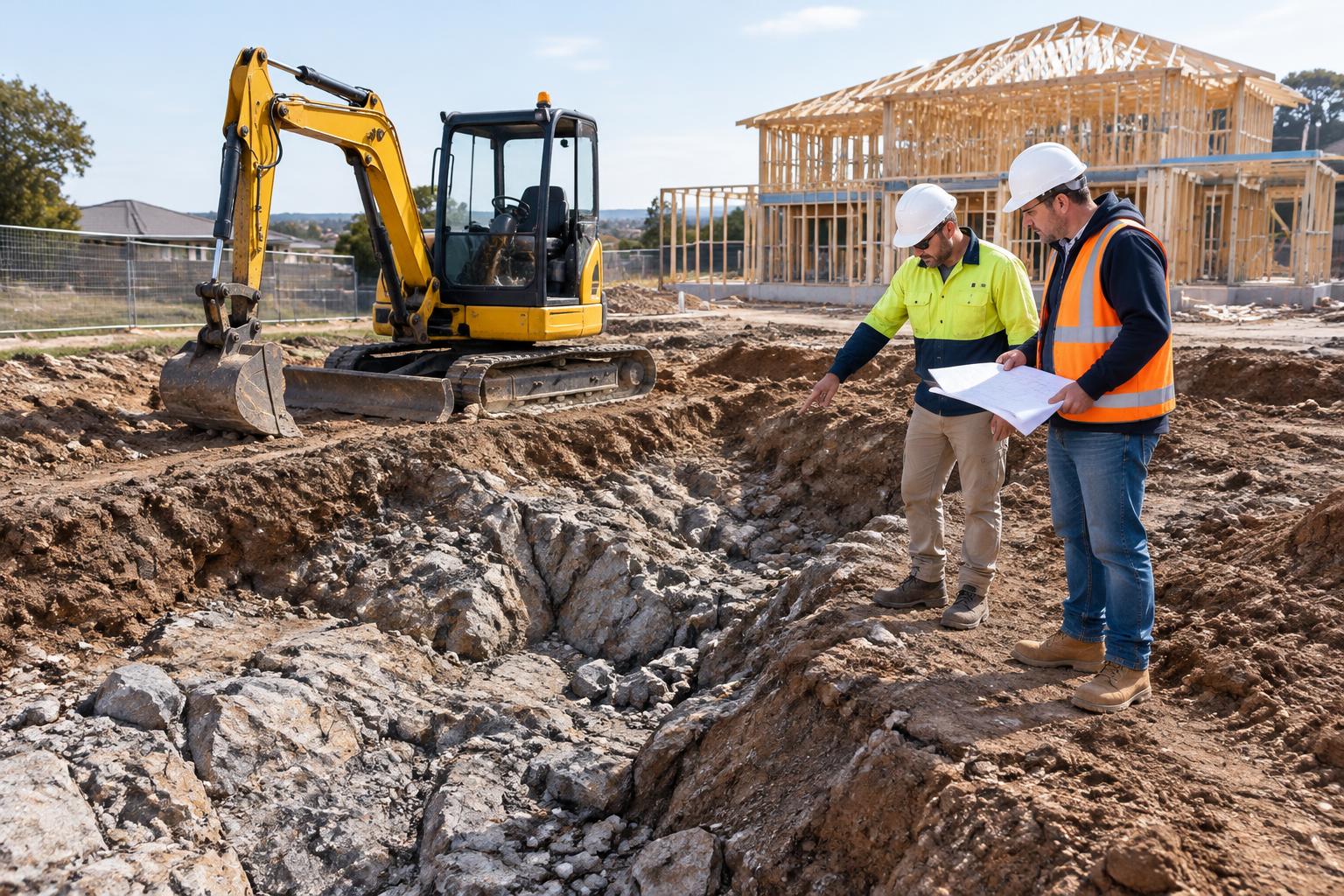
Examples of uncertainty to review include site conditions, incomplete design information, access constraints and unresolved supplier pricing. Whether a particular cost is your risk or a recoverable variation depends on the contract and circumstances.
Use a small risk register
For each material risk, record the uncertain event, the information still needed, a possible cost range, the person checking it and the next review date. Obtain evidence where you can: site investigations, clarified scope and current quotes reduce uncertainty more usefully than an unexplained percentage.
- Has the risk already been priced in a trade allowance?
- Would two listed risks cause the same cost?
- Is the allowance for construction costs, programme effects or both?
- Who can approve its use, and how will the decision be recorded?
A worked allowance example
Fictional AUD, GST-exclusive figures for budget administration, not a recommended contingency rate or price guide.
| Budget measure | Amount |
|---|---|
| Priced base work | $200,000 |
| Separately identified contingency | $15,000 |
| Total cost allowance | $215,000 |
| Approved transfer to a site-work category | $4,000 |
| Unallocated contingency remaining | $11,000 |
Transferring $4,000 from contingency into site work does not increase this total budget: the revised trade allowances total $204,000 and the remaining contingency is $11,000. Adding $4,000 to the trade while leaving all $15,000 available would count the same allowance twice.
The transfer also does not prove the cost was incurred. Record the approved budget decision separately from invoices and payments. These are manual planning examples, not a claim that Smart Way Builds automatically administers contingency transfers.
Review the remaining risk, not just the remaining allowance
At each job review, ask what uncertainty has been resolved, what risks have appeared and whether the allowance still fits the remaining scope. A large unused allowance early in the job does not establish a saving.
Keep your original budget and an explanation of revisions. If scope changes, track the cost and customer-price effects separately in a variation register. Do not assume using contingency makes a variation claim valid.
Connect it to cost control
Review category-level forecasts as well as the job total. An overspend can be hidden by unspent allowances elsewhere. Our weekly construction cost-control guide shows how to combine approved costs with remaining work without double counting.
For context on establishing and monitoring construction costs, see the Australian National Training Register. Explore cost-code budgets and compare plans with no per user fees.